Pinhole Leaks in Copper Pipes: Causes and Repair Options
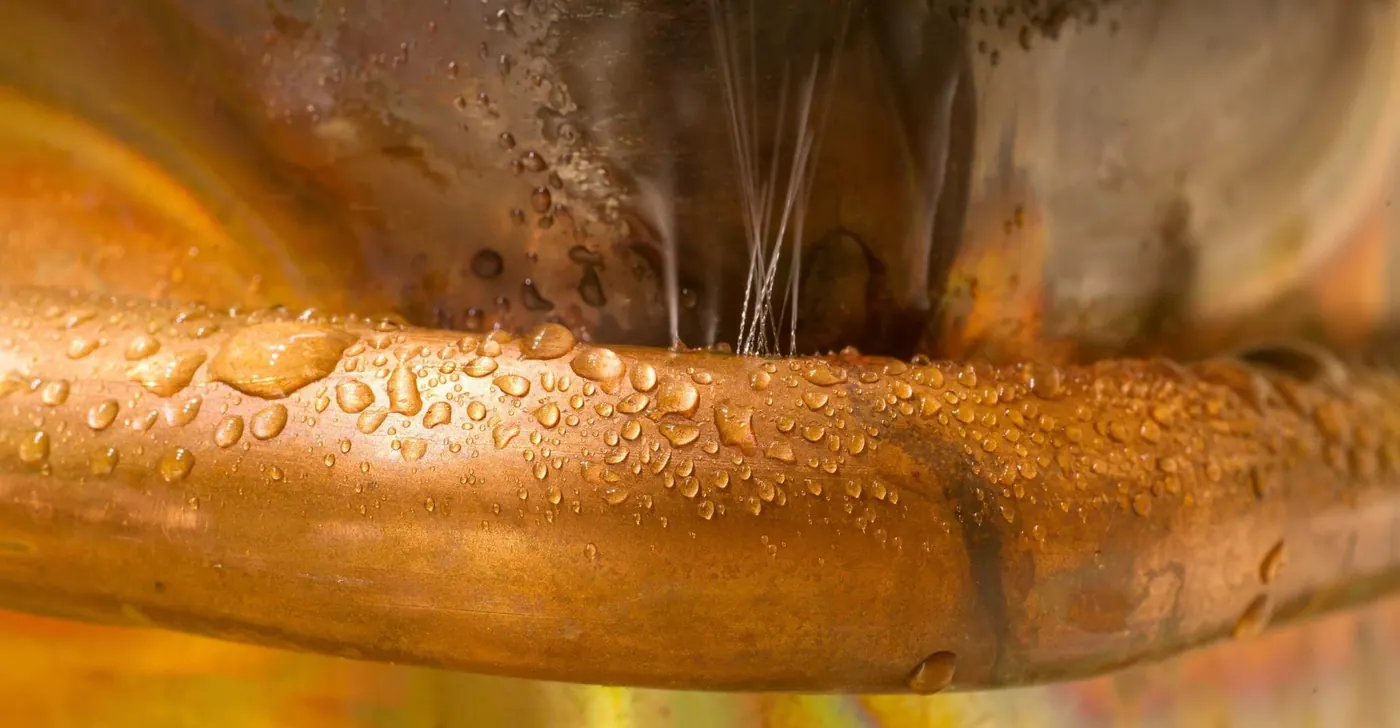
Copper has been a trusted plumbing material for decades, and in many homes it lasts 50 years or more. But under the wrong conditions, it can develop tiny holes no bigger than a pencil point. A pinhole leak might spray a fine mist inside a wall, or drip so slowly that nobody notices until a stain appears on the drywall. The real question is whether you have one isolated failure or the first sign of a pipe system wearing out.
What causes pinhole leaks
- •Water chemistry. Low-pH or otherwise aggressive water slowly dissolves copper from the inside. Some private wells in Central Florida have low pH that accelerates this.
- •High velocity. Water moving too fast, from undersized pipe or a recirculating pump, erodes the pipe wall, especially at elbows and tees.
- •Installation issues. Burrs left inside cut pipe, excess flux, or poor soldering create turbulence and corrosion points.
- •Pitting corrosion. Small localized pits form and deepen until they break through the wall.
- •Electrical issues. Improper grounding can contribute to corrosion in some cases.
Warning signs
- •Water stains on ceilings or walls, often small and round at first.
- •Blue-green staining on fixtures or on the outside of exposed copper pipe.
- •A water bill that rises without explanation.
- •Warm spots on the floor, in slab homes where hot water lines run under the concrete.
- •The sound of hissing or running water when nothing is on.
- •Musty smells or mold in cabinets and closets near plumbing walls.
Repair or repipe?
A single pinhole leak can usually be repaired by cutting out the damaged section and installing a new piece of pipe. A temporary clamp can buy time in an emergency, but it is not a permanent fix. When leaks start repeating, it usually means the pipe wall is thinning throughout the system. At that point, every repair is just finding the next weak spot. Many homeowners in Clermont, Leesburg, and other established Central Florida neighborhoods reach the point where repiping, often with PEX, costs less than chasing leaks and repairing water damage year after year.
Finding leaks without tearing up the house
Professional leak detection uses acoustic listening, thermal imaging, and pressure testing to pinpoint a leak behind walls or under concrete. That means a small access opening instead of exploratory demolition. For slab leaks, options include repairing the spot under the floor or rerouting the line through walls and attic, which avoids breaking concrete.
Frequently asked questions
What causes pinhole leaks in copper pipes?
Common causes include aggressive or low-pH water, high water velocity, poor installation such as burrs left inside cut pipe, and, less often, electrical grounding problems.
How many pinhole leaks before I should repipe?
There is no fixed number, but two or more leaks within a year or so usually signals widespread corrosion. Repiping often costs less than repeated repairs and water damage.
Can pinhole leaks happen under a slab?
Yes. In slab homes, copper lines under the concrete can develop pinhole leaks that show up as warm floors, high water bills, or the sound of running water.
Related service: Leak Detection.
Need a plumber in Central Florida?
Prime Plumbing Inc is family-owned, state-licensed, and available 24/7 for emergencies across Lake County and nearby communities.