Why Is My Water Bill So High? 8 Hidden Leaks to Check
Few envelopes are more annoying than a water bill that is double what you paid last month when nothing about your routine has changed. Before you dispute the charge, assume a leak until you prove otherwise. Most high-bill mysteries we investigate come down to a toilet, an irrigation line, or a pipe hidden somewhere you cannot see. The good news is that your water meter can tell you a lot in about five minutes.
Step one: let the meter talk
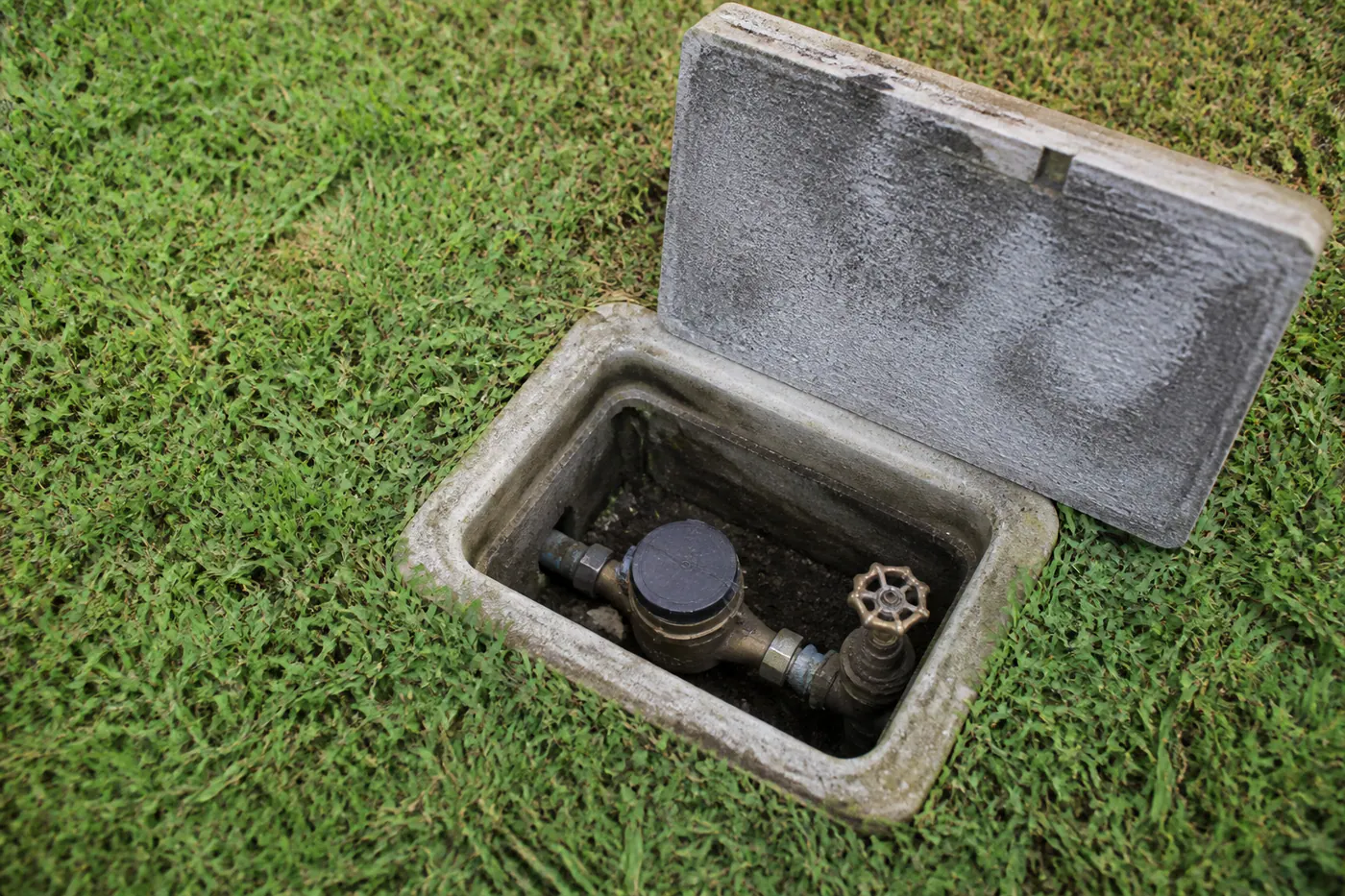
Find your meter box, usually near the street at the edge of the property. Shut off every faucet, the dishwasher, the washing machine, the ice maker, and the irrigation timer. Then lift the lid and look for a small spinning triangle, star, or dial. That is the low-flow indicator. If it moves while nothing is running, water is escaping somewhere between the meter and your fixtures. To narrow it down, close the main shutoff at the house. If the dial stops, the leak is inside the home. If it keeps spinning, the leak is in the service line between the meter and the house, or in an irrigation line that branches off before your shutoff.
The usual suspects
- •Running toilets. A worn flapper lets water seep into the bowl silently, day and night.
- •Irrigation leaks. A cracked lateral or stuck zone valve can run underground for weeks. Look for unusually green or soggy patches of lawn.
- •Slab leaks. Warm spots on tile floors, the sound of running water, or cracks in flooring can point to a pressurized pipe leaking under the concrete.
- •Water heater relief valves. A valve that drips into a drain line or out an exterior pipe is easy to miss.
- •Dripping faucets and showerheads. A faucet dripping once per second can waste about 3,000 gallons a year.
- •Water softener stuck in regeneration. A failed control valve can send water to the drain continuously.
- •Outdoor hose bibs and pool autofill valves. Both can leak quietly outside where you never see the puddle.
- •Underground service line leaks. Common in older neighborhoods and anywhere tree roots or shifting sandy soil stress the pipe.
Do the toilet dye test
Toilets are the single most common source of hidden household leaks, so test every one. Put a few drops of food coloring in the tank, do not flush, and wait 15 minutes. If color shows up in the bowl, the flapper is leaking. A new flapper is inexpensive and usually a ten-minute fix. Also check whether water is spilling into the overflow tube. If it is, the fill valve is set too high or is failing.
When it is time for professional leak detection
If the meter says water is moving but you cannot find a drip anywhere, the leak is probably underground, under the slab, or inside a wall. Most homes in Clermont, Leesburg, and across Central Florida are built on concrete slabs, so supply lines often run beneath the floor. Acoustic listening equipment, thermal imaging, and pressure testing let a technician pinpoint the leak so the repair opens up one small area instead of half your flooring.
Frequently asked questions
How can I tell if I have a leak using my water meter?
Turn off every fixture and appliance, then look at the meter's leak indicator, usually a small triangle or star dial. If it is moving, water is flowing somewhere. Recording the reading and checking again after two hours with no water use works too.
Can a running toilet really raise my bill that much?
Yes. The EPA estimates a constantly running toilet can waste around 200 gallons a day, which can add up to thousands of gallons in a single billing cycle.
Will my utility forgive a high bill from a leak?
Some utilities offer a one-time leak adjustment, usually only after you show proof that the leak was repaired. Call your provider and ask what documentation they need.
Related service: Leak Detection.
Need a plumber in Central Florida?
Prime Plumbing Inc is family-owned, state-licensed, and available 24/7 for emergencies across Lake County and nearby communities.