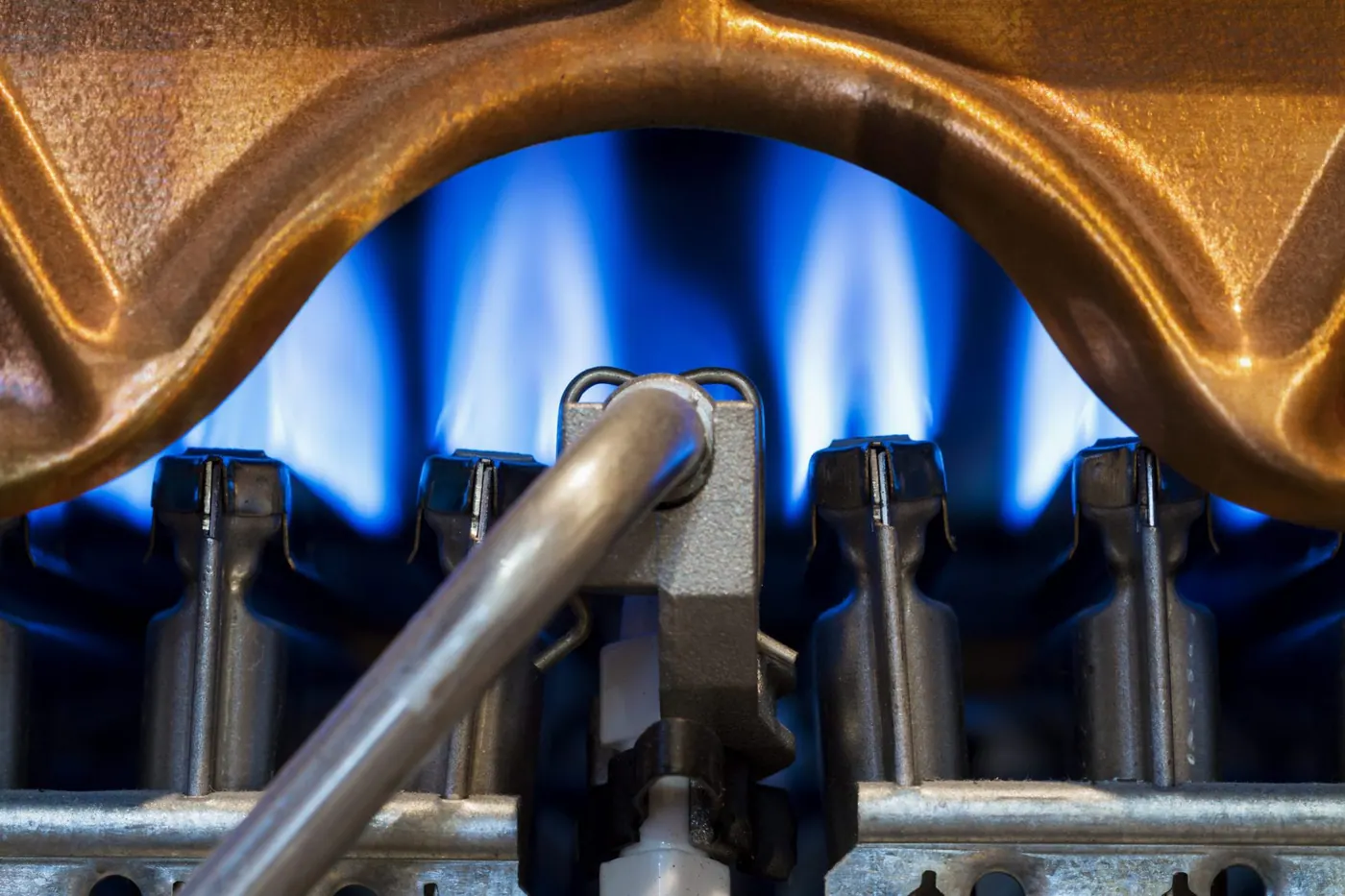
What a Pool-Heater Gas Line Must Account For
Pool heaters commonly have input ratings of several hundred thousand BTU per hour, far above a range or grill. That demand must travel from the natural-gas meter or propane regulator through pipe of sufficient diameter at an acceptable pressure drop. A heater can ignite yet still be underfired when other appliances run, causing nuisance shutdowns, poor combustion, or equipment damage. Proper design starts with the nameplate and the whole-property load.
Sizing needs four pieces of information
The designer needs fuel type, available supply pressure, heater input, and developed pipe length—including fittings and the route, not a straight-line guess. Then all connected appliances and likely simultaneous loads are considered under the applicable sizing method. The meter, propane tank vaporization capacity, first- and second-stage regulators, and existing trunk may need upgrades. A branch that seems large near the equipment can still be fed by an undersized upstream section.
- •Confirm exact heater model, fuel, input rating, and manufacturer clearances.
- •Map every gas appliance and pipe segment from the supply point.
- •Provide an accessible listed shutoff, sediment control where required, and approved connector or union arrangement.
- •Protect outdoor and buried piping against corrosion and physical damage.
- •Arrange permits, pressure testing, inspection, and manufacturer-compliant startup.
Outdoor placement still has combustion rules
A pool heater needs specified clearance from walls, windows, doors, roof overhangs, vegetation, and pool features. Indoor or enclosed installations have additional venting and combustion-air requirements. Equipment pads must drain and remain serviceable. Around Clermont, Montverde, and Howey-in-the-Hills, screen enclosures and later patio additions can alter the open-air conditions that existed when equipment was first planned; the final layout must match the listed installation instructions.
Buried piping and bonding need coordination
Underground metallic piping requires approved materials, corrosion protection, depth, tracing or locating provisions, and protected transitions. Polyethylene gas pipe uses listed fittings and risers installed by qualified personnel. Pool electrical bonding is a separate safety system; gas pipe routing should be coordinated with the pool contractor and electrician without treating fuel piping as an improvised bonding conductor. Utilities must be located before excavation.
Startup proves more than leak tightness
After inspection and safe purging, qualified startup should verify static and operating gas pressure, ignition, combustion behavior, water flow, and operation with other major appliances. A pressure test of new piping does not show that the meter and regulators maintain pressure under full demand. If gas odor is present, avoid switches and flames, leave the area, and follow the fuel supplier's emergency instructions.
Frequently asked questions
Can a pool heater use an existing grill line?
Usually not without calculation. Pool heaters have much larger input ratings, and the existing branch, meter, regulator, and total system may be undersized.
Can natural-gas equipment run on propane?
Only if the exact model is listed for approved conversion using the manufacturer's procedure and parts. Never change orifices or regulators by guesswork.
Is a permit needed for a pool-heater gas line?
Gas piping and appliance work commonly require permits and inspection. The authority having jurisdiction determines the exact requirements for the property.
Related service: Gas.
Need a plumber in Central Florida?
Prime Plumbing Inc is family-owned, state-licensed, and available 24/7 for emergencies across Lake County and nearby communities.